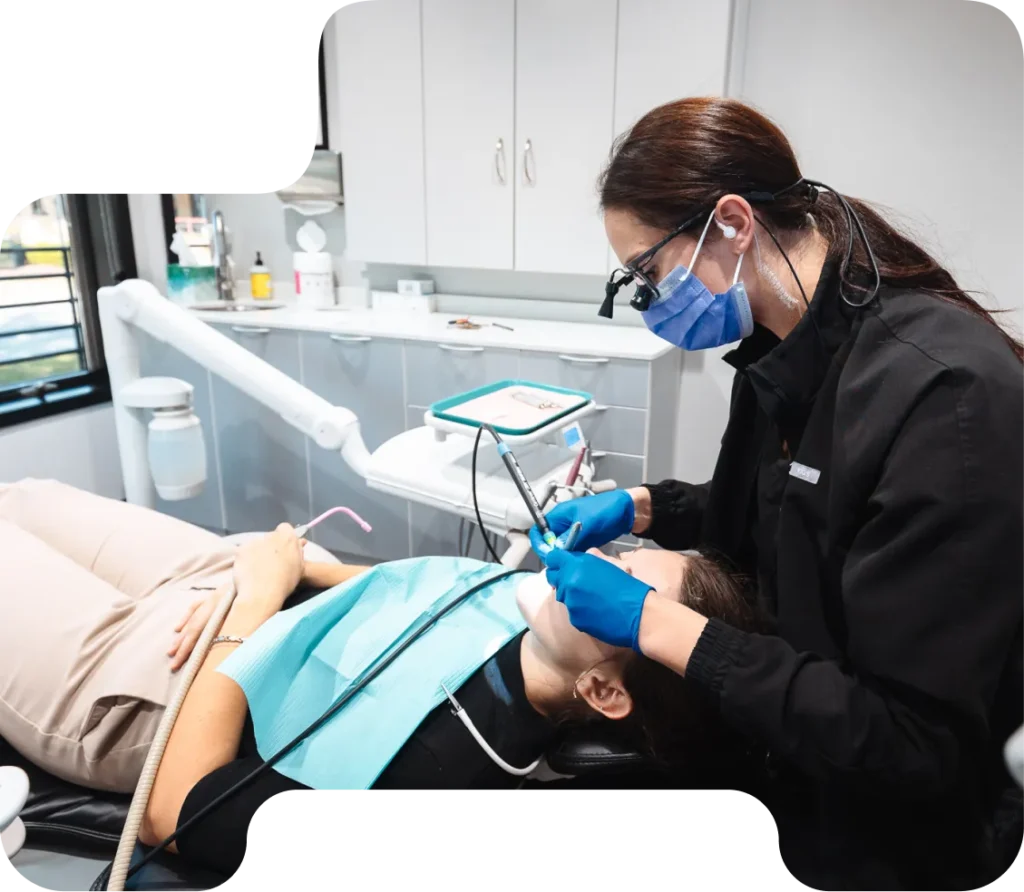
At Complete Health Dentistry, we help you care for the teeth you have and explore ways to repair or replace teeth when they need attention. General dentistry focuses on prevention and evaluation. Restorative dentistry addresses decay, damage, and missing teeth so we can work toward comfortable everyday function.
Your care starts with your concerns, health history, and goals. Whether you are due for an exam or wondering what to do about a damaged tooth, we take time to explain the findings and your options at our Grand Rapids office. Request an appointment to get started.
Prevention begins with understanding what is happening in your mouth. We consider your teeth, gums, existing dental work, and habits together, then discuss care that fits your needs.
A dental evaluation helps us look for decay, damaged restorations, gum concerns, and changes in oral tissues. Screening can identify findings that need a closer look, but it cannot rule out every problem. Tell us about a sore, lump, or other change that persists, even if it does not hurt.

Prevention begins with understanding what is happening in your mouth. We consider your teeth, gums, existing dental work, and habits together, then discuss care that fits your needs.
A dental evaluation helps us look for decay, damaged restorations, gum concerns, and changes in oral tissues. Screening can identify findings that need a closer look, but it cannot rule out every problem. Tell us about a sore, lump, or other change that persists, even if it does not hurt.
Your cavity risk can be influenced by home care, dietary habits, dry mouth, and previous decay. We discuss prevention based on that risk and your preferences. Fluoride can help prevent cavities; sealants protect susceptible chewing surfaces. Ask us which preventive options are appropriate for you and available in our practice. [1]
Professional cleaning and daily home care support your oral health. If the examination shows signs of gum disease, your needs may extend beyond a routine cleaning. We explain the findings and whether periodontal care should be part of your plan.

Repairing a tooth involves more than choosing a material. We look at how much healthy tooth remains, where the damage is, how your teeth meet, and what matters to you. The goal is a restoration suited to the tooth and the way you use it.
A crown covers a tooth to restore its shape and provide support when a filling alone may not be enough. It may be considered for a weakened or broken tooth, or a tooth with a large existing restoration. [3] We discuss material choices, appearance, bite, and any relevant sensitivities. Learn more about our approach to biocompatible dentistry.
A bridge replaces one or more missing teeth using support from neighboring teeth or implants. We evaluate the gap, supporting structures, cleaning needs, and your bite before discussing whether a bridge is suitable. We also explain alternatives so you can compare the options.
A dental implant is placed in the jaw to support a replacement tooth or restoration. [4] Suitability depends on factors such as bone, gum health, medical history, and healing considerations. Ask us about the evaluation, treatment stages, and who would provide each part of your care. Implant treatment is not the right choice for everyone.
A filling repairs a cavity by replacing tooth structure lost to decay. After removing decayed tissue, the dentist fills and shapes the area. The size and location of the cavity help determine whether a filling is appropriate or whether the tooth needs additional support. [2]

This overview can help you prepare questions. An examination is needed before recommending treatment.
| Concern | Option your dentist may discuss |
|---|---|
| A cavity with enough sound tooth remaining | A filling to restore the affected area. |
| A weakened or substantially damaged tooth | A crown or another restoration based on remaining structure. |
| One or more missing teeth | A bridge or implant-supported replacement, depending on suitability. |
| Repeated damage to teeth or dental work | Evaluation of decay risk, wear, habits, bite and restoration condition. |
When a problem keeps returning, we ask what may be contributing. Recurrent decay may call for a closer look at dry mouth, diet, home care, or an existing restoration. Pain or signs of infection may need a different evaluation; our information on root canals and abscesses explains that topic in more detail.
If wear or grinding is a concern, we may discuss whether a custom night guard could help protect teeth and restorations. A protective appliance does not establish the cause of grinding. We explain what an option can reasonably do and where further evaluation may be needed.
We begin with your symptoms, past dental experiences, health history, and priorities. Examination findings and any indicated imaging help guide the discussion. From there, we can explain what needs attention, what alternatives may be reasonable, and how treatment might be organized.
You can read about your first visit and meet our team before coming in. Bring your questions, including concerns about comfort, materials, timing, or cost. You should understand the recommendation before deciding how to proceed.
The amount and condition of the remaining tooth matter. A filling may suit a smaller area of decay, while a more weakened tooth may need greater support. We assess the tooth before recommending an option. [2,3]
No restoration is guaranteed to last forever. Home care, decay risk, chewing forces, and the condition of the supporting teeth or gums can affect maintenance needs. Regular evaluation helps us monitor your dental work.
Pain is not the only reason for an evaluation. A chipped tooth, food catching around a restoration, a change in your bite, or a missing tooth is worth discussing. Call us about your concern so we can help you determine an appropriate next step.
Complete Health Dentistry is located at 901 Michigan Street NE, Grand Rapids, MI 49503. Call (616) 458-7267 or request an appointment through our contact form. Tell us what you would like help with, and we can discuss the next step toward your care.
1. National Institute of Dental and Craniofacial Research. Fluoride and Dental Health. https://www.nidcr.nih.gov/health-info/fluoride. Accessed November 17, 2026.
2. National Institute of Dental and Craniofacial Research. Dental Fillings. https://www.nidcr.nih.gov/health-info/dental-fillings. Accessed November 17, 2026.
3. American Dental Association. Crowns. MouthHealthy. https://www.mouthhealthy.org/all-topics-a-z/crowns. Accessed November 17, 2026.
4. American Dental Association. Implants. MouthHealthy. https://www.mouthhealthy.org/all-topics-a-z/implants. Accessed November 17, 2026.