



Always Congested? Mouth Breathing? Waking Up Tired? Your Jaw Structure Could Be Part of the Problem.

Symptoms That Seem Unrelated May Have Something in Common

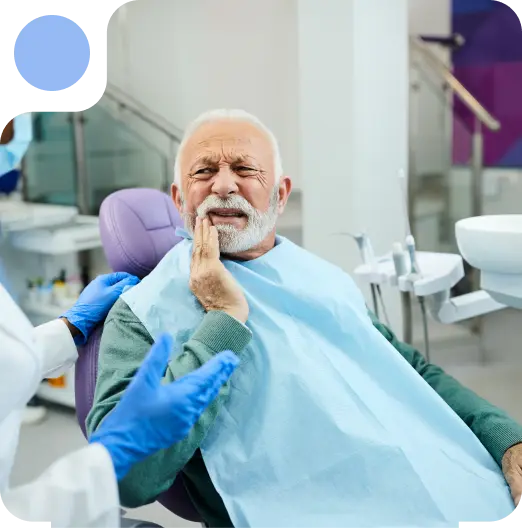
Maybe you have always struggled to breathe comfortably through your nose. Maybe you wake up with a dry mouth, snore at night, or get plenty of hours of sleep but still don't feel rested in the morning. Perhaps your teeth have always been crowded, your tongue feels like it doesn't have enough room, or you had orthodontic treatment years ago only to watch some of that crowding return.

These can seem like completely separate problems. Sometimes, they are. But sometimes they are different signs of the same underlying structural issue: there simply isn't enough room.

At Complete Health Dentistry, we look beyond individual symptoms to understand how the teeth, jaws, tongue, airway, breathing, and sleep work together. For some patients, that investigation reveals something they may have never considered before: a narrow upper jaw.

What Does Your Upper Jaw Have to Do With Breathing?

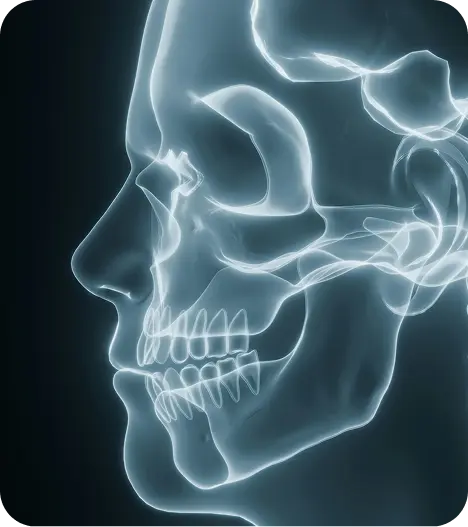
More than you might think. The roof of your mouth is also the floor of your nasal cavity. That means the size and shape of the upper jaw can influence much more than how your teeth fit together.
When the upper jaw develops too narrowly, the palate may become high and constricted. There may be less room for the teeth and tongue, which can contribute to crowding, an improper bite, or difficulty maintaining healthy tongue posture. The anatomy of the upper jaw is also closely connected with the nasal cavity, which is why skeletal development may be one piece of the puzzle for certain patients struggling with nasal breathing or sleep-related concerns.
This doesn’t mean every person who snores or breathes through their mouth has a narrow upper jaw. It means these symptoms deserve to be investigated rather than viewed in isolation.
The question we want to answer is simple: Why is this happening?

None of these symptoms automatically means you need palatal expansion. They are clues. Our job is to understand what those clues are telling us.

Straight Teeth Don't Always Mean There Is Enough Space

Traditional orthodontics can do an excellent job of moving teeth into better positions. But the position of your teeth and the size of the skeletal structure underneath them are two different things. Imagine arranging furniture in a room that is simply too small. You may be able to organize everything more neatly, but you haven’t changed the size of the room.
Something similar can happen in the mouth. A person can have relatively straight teeth while still having a narrow upper jaw, limited tongue space, or structural concerns that may contribute to breathing and function. This can be particularly important for adults who had orthodontic treatment when they were younger but continue to experience mouth breathing, poor sleep, crowding, or other symptoms.
At Complete Health Dentistry, the goal isn’t simply to ask, “How can we straighten these teeth?” We want to know whether there is enough room for the teeth, tongue, airway, and surrounding structures to function the way they should.

→ Comprehensive Care

How We Find Out What's Actually Happening

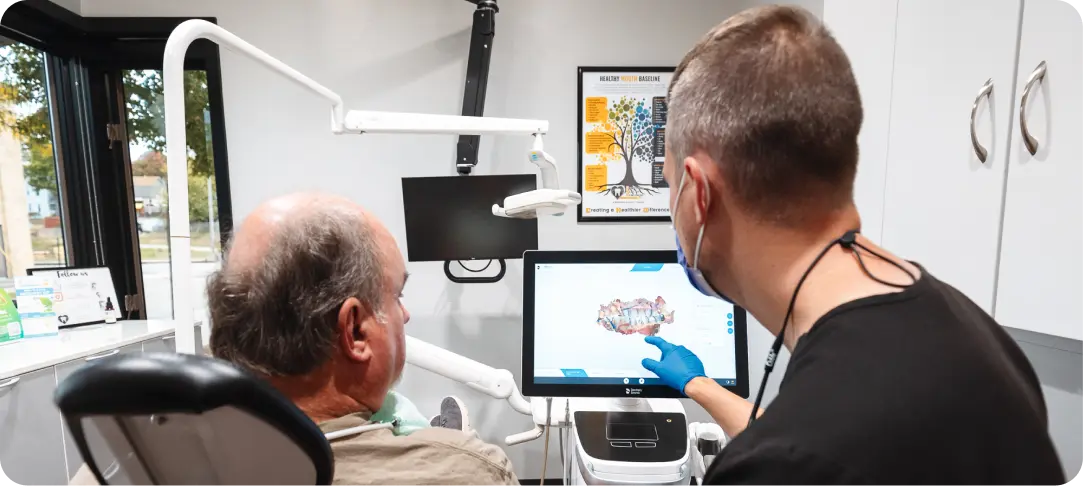
Before recommending treatment, we investigate. A comprehensive evaluation allows us to look at your teeth and bite while also considering your palate, jaw development, tongue space, breathing patterns, airway, sleep history, and overall health.

Advanced 3D CBCT imaging can provide another important piece of that picture. Instead of relying only on what we can see inside the mouth, this technology allows us to evaluate the underlying skeletal structures and better understand how your anatomy may relate to the symptoms you're experiencing.

Sometimes we discover that the upper jaw is adequately developed and something else deserves our attention. Other times, we find that skeletal restriction may be an important part of the problem. That's when the conversation about expansion begins.

What Happens If Your Upper Jaw Is Too Narrow?

Children are still growing, which gives us opportunities to guide development using traditional orthodontic expansion techniques. Adults are different. Once facial growth is largely complete, expanding the underlying upper jaw can require a different approach. For appropriately selected older adolescents and adults, one option is Miniscrew-Assisted Rapid Palatal Expansion, commonly called MARPE.
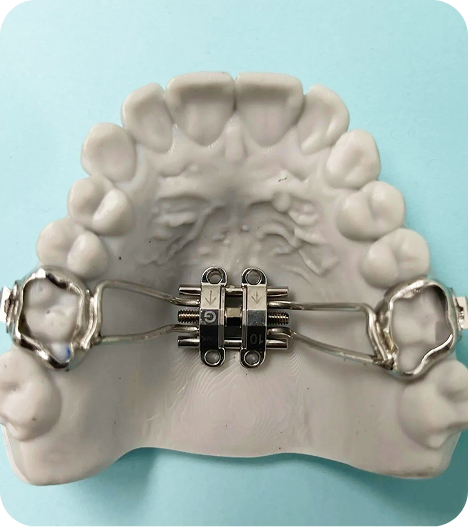
MARPE is a specialized orthodontic treatment designed to create skeletal expansion of the upper jaw. Instead of relying primarily on the teeth for support, the appliance uses small temporary anchorage devices placed in the palate. This allows expansion forces to be directed more effectively toward the underlying upper jaw.
In plain English, we’re not simply trying to push the teeth outward. We’re trying to create more room at the structural level.
Why Creating More Room Can Matter

When skeletal expansion is appropriate, increasing the width of the upper jaw can create additional room for the teeth and tongue while improving the relationship between the upper and lower jaws. Because the palate and nasal cavity are anatomically connected, changes to the upper jaw may also affect dimensions within the nasal cavity.
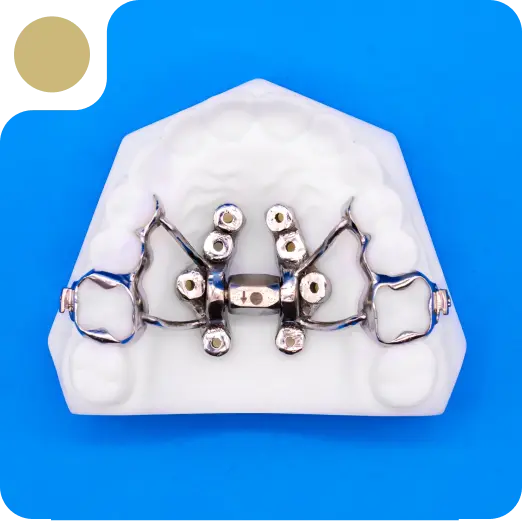

For certain patients, this is one reason expansion may be considered as part of a broader airway-focused treatment plan. But MARPE is not a universal treatment for snoring, sleep apnea, nasal congestion, or fatigue. Those symptoms can have many causes, and expansion should only be considered when the patient’s anatomy and comprehensive evaluation indicate that skeletal restriction is contributing to the larger problem.
That’s an important distinction. At Complete Health Dentistry, we aren’t interested in finding a reason to use an appliance. We’re interested in finding the reason you’re experiencing the symptoms in the first place.

What Is MARPE Treatment Like?

If your evaluation indicates that MARPE is appropriate, your appliance is planned around your individual anatomy and treatment goals. The appliance is stabilized using small temporary anchorage devices in the palate. You will receive instructions for gradually activating the appliance, creating controlled expansion over time while your progress is closely monitored.
During expansion, a temporary space may develop between the upper front teeth. While this can surprise patients who aren’t expecting it, it can be a normal part of successful expansion and can later be addressed during orthodontic treatment.
Once the desired expansion has been achieved, the appliance remains in place for a period of stabilization while the bone and surrounding tissues adapt. Depending on your needs, orthodontic treatment may then be used to properly position and align the teeth within the newly available space. Every treatment plan is different because every patient’s anatomy is different.

MARPE Is a Tool. Understanding the Problem Comes First.

It's easy to focus on the name of a treatment. We would rather focus on why you might need it. Complete Health Dentistry approaches orthodontics as one piece of a much larger picture. Your teeth exist within a system that includes your jaws, tongue, muscles, nasal cavity, airway, breathing, sleep, and overall health. Looking at one without considering the others can mean missing an important part of the story. For some patients, creating more skeletal space can be transformative. For others, expansion isn't the answer at all. The only way to know is to investigate.

There May Be a Reason You've Always Struggled With These Symptoms

There may be a structural reason behind what you're experiencing.

A comprehensive evaluation at Complete Health Dentistry can help determine whether your upper jaw, bite, airway, and symptoms are connected and whether palatal expansion should be part of your treatment plan. Let’s find out what’s really going on.

If you have spent years dealing with mouth breathing, difficulty breathing through your nose, poor sleep, snoring, dental crowding, limited tongue space, or orthodontic relapse, don’t assume these are simply things you have to live with.

Newsletter Submitted

Thank you for submitting your request, we will be adding you to our newsletter shortly.

Form Submitted

Thank you for submitting your request, someone from our team will reach out to you shortly.