

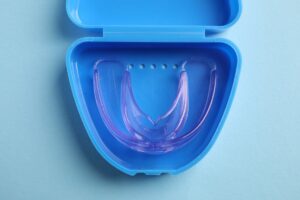
A narrow upper jaw can affect the way the teeth fit together. If expansion has been recommended, you may hear about a traditional palatal expander or MARPE, short for Miniscrew-Assisted Rapid Palatal Expansion. The main difference is how the appliance applies force to the upper jaw.
This article provides general education. An individual examination is needed to determine whether expansion is appropriate.
How traditional palatal expansion works
A traditional tooth-borne expander attaches to selected upper teeth. It applies pressure across the palate, producing a combination of skeletal and dental changes. In growing children and younger adolescents, the midpalatal suture is generally more responsive to expansion.
As the suture and surrounding structures mature, skeletal expansion with a tooth-borne device becomes less predictable. Age offers useful context, but it is not a strict cutoff: development and anatomy vary between people.
What makes MARPE different?
MARPE uses small temporary screws in the palate to transfer expansion forces to bone. Depending on the appliance design, teeth may also help support the device. This approach can produce skeletal expansion in selected older adolescents and adults with a narrow upper jaw.
MARPE does not guarantee successful suture opening or eliminate the possibility of surgery. Some patients need another approach, including surgically assisted expansion. Our MARPE service page explains how Complete Health Dentistry approaches evaluation in Grand Rapids.
Comparing the approaches
| Consideration | Traditional tooth-borne expander | MARPE |
|---|---|---|
| Support | Primarily the teeth | Palatal miniscrews, sometimes with tooth support |
| Typical use | Growing patients with a responsive suture | Selected older adolescents and adults |
| Movement | Both skeletal and dental changes | Aims to increase the skeletal component; dental movement can still occur |
| Planning | Assessment of growth, bite, teeth, and jaw width | Assessment of jaw width, bone, suture development, gums, and screw placement |
| Potential concerns | Tooth tipping, tissue irritation, and periodontal effects | Screw irritation or loosening, dental or periodontal effects, asymmetry, or unsuccessful expansion |
What does the research show?
A 2021 systematic review of MARPE in late adolescents and adults reported a mean success rate of 92.5% across included studies. That pooled figure is not a prediction for an individual patient. The authors noted limitations in the evidence, and results depend on patient selection, anatomy, appliance design, and how success is measured.
The practical question is whether a particular approach can achieve a stable, healthy result for your jaw and bite. A high reported success rate should not replace a discussion of risks, alternatives, and the possibility that expansion may not proceed as planned.
Who might be considered for MARPE?
A narrow upper jaw, a posterior crossbite, or crowding related to limited width may prompt an evaluation. Your dentist or orthodontic provider examines more than age: the condition of the teeth and gums, bone anatomy, jaw relationships, and treatment goals all matter.
Breathing concerns also deserve appropriate evaluation, but increasing jaw width is not a guaranteed treatment for snoring or sleep apnea. Sleep apnea requires medical diagnosis and follow-up. See our airway assessment information for how dental screening fits into coordinated care.
Frequently asked questions
Is MARPE only for adults?
No. It may be considered in selected older adolescents as well as adults. The appropriate appliance depends on development, anatomy, and the intended treatment result.
Will MARPE let me avoid surgery?
It may provide a nonsurgical option for some patients, but it cannot guarantee that surgery will be unnecessary. Ask what the next step would be if expansion is unsuccessful.
Is MARPE always better than a traditional expander?
No. Traditional expansion remains an established option for growing patients. MARPE adds bone support that may be helpful in selected more mature patients, with its own requirements and risks.
Getting started
If you have been told your upper jaw is narrow, contact Complete Health Dentistry to discuss an evaluation. We can explain the findings, possible treatment paths, and whether additional specialist input is needed.