
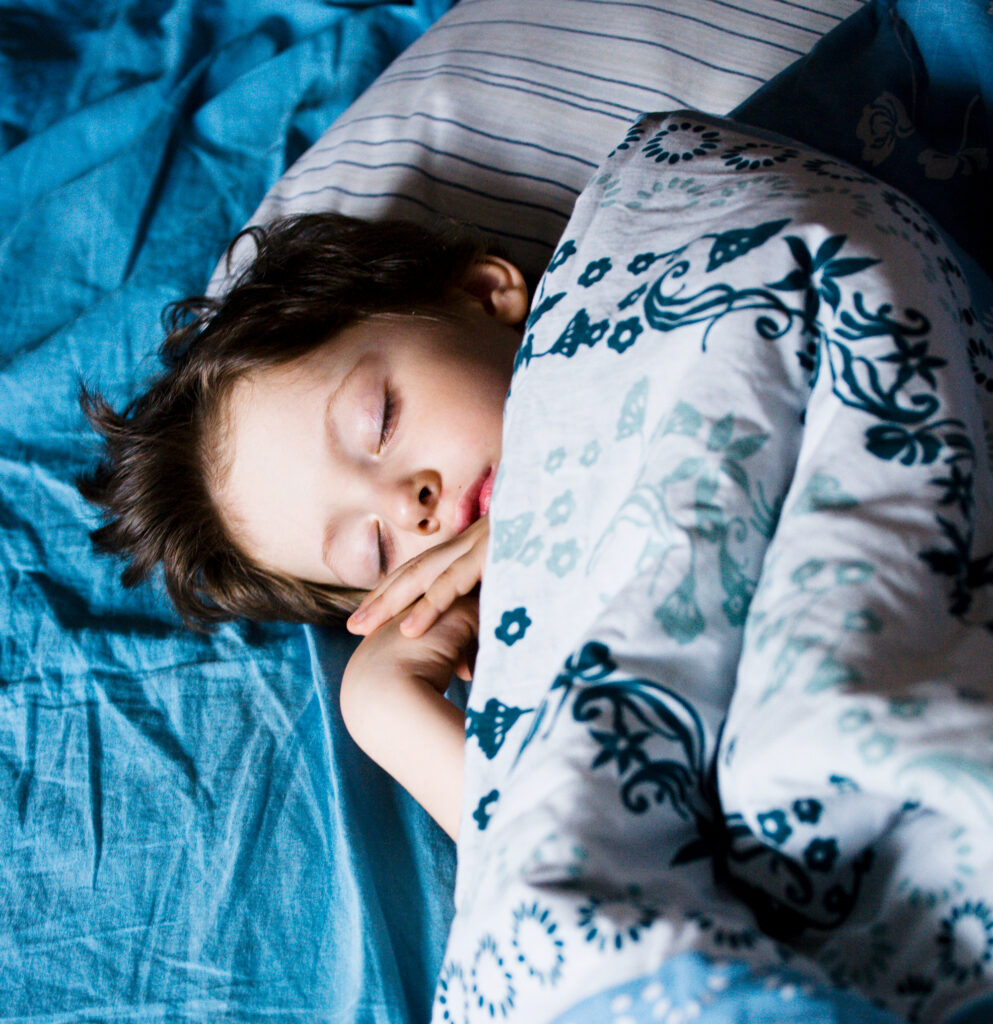


Children snore when airflow through the nose or throat is partly restricted, causing nearby tissues to vibrate. Common reasons include congestion, allergies, and enlarged tonsils or adenoids. Snoring that happens regularly, especially with gasping or breathing pauses, deserves a medical evaluation.
An occasional noisy night during a cold is different from snoring that continues when your child is well. The pattern and accompanying symptoms matter more than how loud the snoring sounds.
When childhood snoring needs attention
| What you notice | What to do |
|---|---|
| Snoring during a cold that clears as congestion improves | Monitor the pattern. Tell your child’s clinician if it persists or returns regularly. |
| Snoring on most nights, mouth breathing, restless sleep, or daytime changes | Arrange an appointment with your child’s pediatrician. Mention the sleep symptoms to their dentist, too. |
| Repeated gasping, choking, or pauses followed by resumed breathing during sleep | Contact your child’s medical provider promptly for guidance and assessment. |
| Severe trouble breathing, blue or gray lips or skin, or unresponsiveness | Call 911 or your local emergency number immediately. |
These patterns guide the next step; they cannot confirm or rule out sleep apnea. This article provides general education and does not replace an individual medical evaluation.
Common causes of snoring in children
Enlarged tonsils and adenoids can reduce space for airflow. Tonsils sit at the back of the throat; adenoids are behind the nose. Large tonsils or adenoids do not automatically mean a child has sleep apnea.
Colds and nasal allergies can also make breathing noisier by causing swelling and congestion. Other contributors include excess weight, certain medical conditions, and differences in jaw or facial structure. More than one factor may be involved.
Signs to watch for at night and during the day
Alongside snoring, notice whether your child sleeps with an open mouth, tosses and turns, wakes frequently, or tips their head back to breathe. Gasping, choking, and witnessed breathing pauses are particularly important to report.
Daytime clues can include morning headaches, sleepiness, irritability, difficulty paying attention, or unusually active behavior. New bedwetting may also be relevant. These symptoms have several possible causes; they do not establish that a sleep problem is responsible.
Snoring and obstructive sleep apnea
Sleep-disordered breathing is an umbrella term for breathing problems during sleep, ranging from snoring to obstructive sleep apnea. With obstructive sleep apnea, the upper airway repeatedly narrows or closes enough to reduce or interrupt airflow.
A child can snore without having sleep apnea. However, the sound alone cannot tell you whether breathing and sleep are being disrupted, and regular snoring should not simply be dismissed as harmless.
How clinicians evaluate a child who snores
Start with your child’s pediatrician. The evaluation usually includes a sleep history and physical examination. Depending on the findings, your child may be referred to an ear, nose, and throat specialist or a pediatric sleep specialist.
An overnight sleep study, called polysomnography, may be recommended to diagnose obstructive sleep apnea. It records breathing, oxygen levels, brain activity, and other sleep measurements. A dental examination or airway image alone cannot establish how your child breathes throughout sleep.
What to bring to the appointment
- A record of how often snoring occurs and whether it continues when your child is well.
- Notes about gasping, breathing pauses, sleep position, awakenings, and daytime changes.
- A short recording of the snoring or breathing pattern, if you can safely capture one without delaying care.
- Details of congestion, allergies, medicines, and relevant medical history.
How dental screening can help
A dentist can screen for sleep-related breathing concerns and assess oral features such as tonsil size, tongue position, and jaw development. Suspected sleep apnea needs evaluation by an appropriate medical provider.
If orthodontic or oral-function concerns are present, dental care may form part of a coordinated plan. Learn more about our Children’s Dentistry services and airway assessment. Expansion appliances and myofunctional therapy are not automatic treatments for snoring; suitability depends on the child’s diagnosis, growth, and clinical findings.
Frequently asked questions
Is occasional snoring normal in children?
Occasional snoring can happen with congestion during a cold. If it persists after your child recovers, occurs regularly, or comes with gasping or breathing pauses, arrange an evaluation.
Can a child have sleep apnea without looking tired?
Yes. Some children show irritability, attention difficulties, or hyperactivity rather than obvious sleepiness. Describe both nighttime and daytime symptoms to your child’s clinician.
Will removing tonsils stop the snoring?
Removing enlarged tonsils and adenoids can help selected children with obstructive sleep apnea. It is not appropriate for every child, and symptoms can persist after surgery. Treatment and follow-up depend on the individual evaluation.
Can jaw development affect breathing during sleep?
Jaw and facial structure can contribute to airway narrowing in some children. A dental or orthodontic assessment can identify relevant features, but it does not replace a medical sleep evaluation.
Take the next step
If your child snores regularly, contact their pediatrician and tell their dentist what you are noticing. Together, the appropriate providers can determine whether a sleep evaluation or coordinated dental assessment is needed.
Learn about our Sleep-Disordered Breathing program, Orthodontics and Myofunctional Therapy, and Airway and Sleep Health services.
References
1. Cleveland Clinic. Does Your Child Snore? When It’s Not Normal.
3. American Academy of Pediatric Dentistry. Policy on Obstructive Sleep Apnea. Latest revision 2026.
4. American Thoracic Society. Obstructive Sleep Apnea in Children. Updated February 2021.