
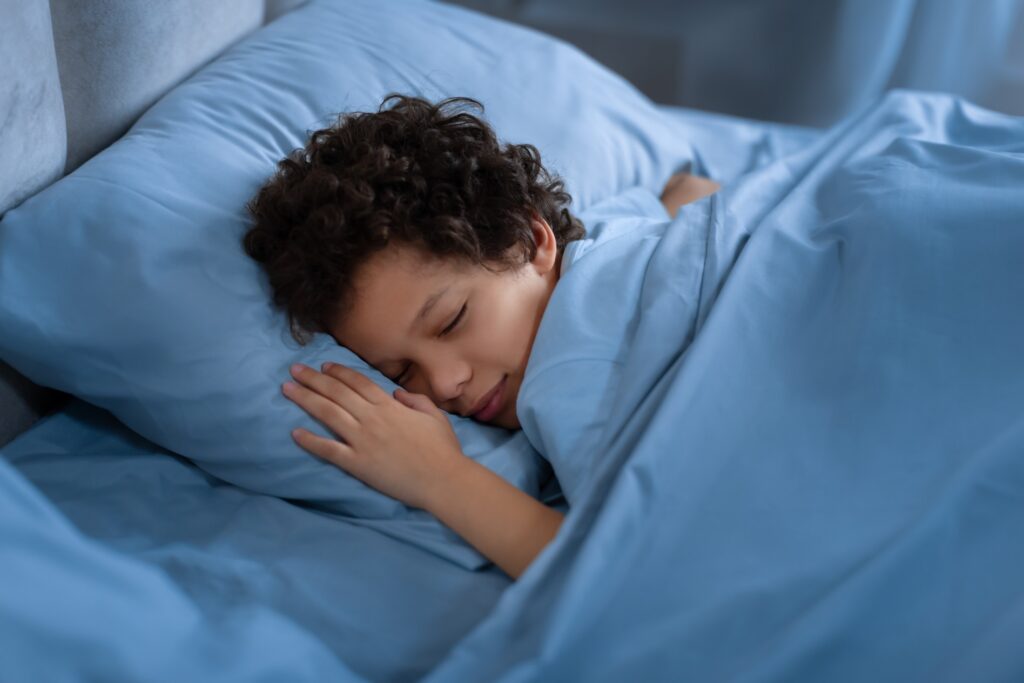
A child may sleep with their mouth open because congestion, allergies or enlarged tonsils or adenoids make nasal breathing difficult. An open mouth alone does not establish the cause or diagnose sleep apnea. However, a regular pattern—particularly with snoring, restless sleep or daytime symptoms—is worth discussing with your child’s healthcare providers.
You might first notice it while checking on your child at bedtime: parted lips, noisy breathing or a dry mouth the next morning. The useful next step is to understand when it happens and what other signs accompany it.
Common Reasons Children Breathe Through Their Mouths
The nose normally filters, warms and moistens incoming air. When nasal airflow is restricted, breathing through the mouth may become an easier route.
Possible contributors include:
- Colds and nasal congestion: Temporary stuffiness can make nasal breathing uncomfortable.
- Allergies: Ongoing inflammation and congestion may interfere with breathing through the nose.
- Enlarged tonsils or adenoids: These tissues can reduce the space available for breathing.
- Nasal anatomy: Structural differences may contribute to difficulty moving air through the nose.
More than one factor can be involved. Rather than assuming your child simply prefers mouth breathing, ask whether something is making nasal breathing difficult.
Occasional Mouth Opening or a Persistent Pattern?
Context helps your child’s providers decide what to investigate. Notice whether mouth opening appears only during an illness or continues when your child otherwise seems well.
| What you notice | What to discuss |
|---|---|
| Mouth opening mainly during a cold | Whether breathing returns to its usual pattern as congestion clears |
| Frequent congestion or seasonal symptoms | Whether allergies or another nasal concern need evaluation |
| Mouth breathing on many nights | How long it has continued and whether it also happens during the day |
| Snoring, gasping or witnessed breathing pauses | Whether a medical sleep evaluation is appropriate |
| Dry mouth, morning headaches or daytime difficulties | Whether sleep quality or another health concern may be contributing |
These observations help guide a conversation. They cannot identify the cause on their own.
Does Mouth Breathing Mean My Child Has Sleep Apnea?
No. Mouth breathing can occur for several reasons, and not every child who sleeps with an open mouth has obstructive sleep apnea.
Sleep apnea involves repeated interruptions in breathing during sleep. Possible accompanying signs include snoring, breathing pauses, frequent waking and morning dry mouth or headaches. Some children appear sleepy during the day, while others become unusually active or have trouble paying attention.
Share these concerns with your child’s pediatrician. A medical evaluation can determine whether referral or sleep testing is appropriate. A dental examination adds useful information about oral structures, but it does not replace medical diagnosis.
If your child is struggling to breathe, seek emergency medical help.
How Mouth Breathing Relates to Jaw and Bite Development
Persistent mouth breathing has been associated with differences in facial growth and bite relationships in children. Research has reported differences in jaw position, tooth inclination and airway measurements.
An association does not mean mouth breathing alone caused those changes—or that every child will develop them. Growth involves multiple influences, including anatomy and the underlying reason for breathing difficulty.
This makes an individualized examination more useful than predicting future problems from a photograph or sleeping position. Your dentist can assess your child’s palate, tooth alignment and bite, then explain which findings warrant monitoring or further evaluation.
Where Tongue Posture and Oral Muscle Function Fit
Tongue position, lip closure and swallowing patterns may be considered during an oral examination. These findings can help your dental team understand how your child’s mouth functions.
However, tongue posture should not automatically be treated as the explanation for mouth breathing. If nasal airflow is restricted, addressing oral habits alone may leave the breathing difficulty unresolved.
Our Orthodontics & Myofunctional Therapy page explains this part of care. Whether exercises, orthodontic treatment or another approach is appropriate depends on your child’s findings and coordination with their healthcare team.
What to Bring to an Evaluation
You do not need to diagnose the problem before making an appointment. A short record of what you have noticed can make the visit more useful.
Consider writing down:
- When you first noticed the pattern.
- Whether it happens during illness, allergy symptoms or throughout the year.
- Whether your child snores, wakes frequently or appears to gasp.
- Any morning discomfort or changes in daytime energy and attention.
- Previous evaluations, treatments and current medications.
Bring questions about what each recommended assessment would clarify. If a treatment is proposed, ask what it is intended to address, what alternatives exist and how progress will be checked.
How Our Dental Team Can Help
At Complete Health Dentistry in Grand Rapids, we consider oral development and breathing concerns within your child’s broader care. Learn more about our children’s dental care and airway assessment.
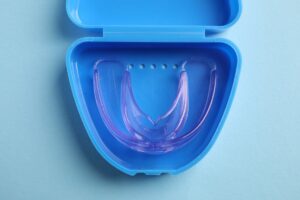
Our Sleep-Disordered Breathing page introduces our Healthy Start program. An evaluation helps determine whether dental treatment deserves consideration; mouth breathing alone does not establish that a child needs an appliance.
Our Airway & Sleep Health page explains our broader approach. When medical assessment is needed, dental care should complement that process.
Frequently Asked Questions
Can a child have sleep apnea without loud snoring?
The volume of snoring does not reliably establish whether a child has sleep apnea. Describe breathing pauses, gasping, disrupted sleep or daytime concerns to your child’s pediatrician, even if the snoring seems quiet.
Can my dentist diagnose why my child mouth-breathes?
A dentist can identify relevant oral findings and screen for sleep-related concerns. Nasal obstruction and suspected sleep apnea may require evaluation by a pediatrician, ENT or sleep specialist.
Will my child need a palate expander or Healthy Start appliance?
Not necessarily. Treatment depends on the cause of the breathing concern and your child’s dental and developmental findings. Dental appliances require individual assessment rather than a recommendation based only on an open-mouth sleeping pattern.
Should I wait until my child’s next routine dental visit?
If the pattern is persistent, contact your child’s pediatrician and let your dental team know. Breathing pauses, gasping or significant sleep disruption deserve timely medical attention rather than waiting for a routine checkup.
Understanding the Pattern Comes First
A child sleeping with their mouth open is an observation worth understanding, not a diagnosis. Noticing the pattern and sharing it with the right providers can help clarify whether your child needs treatment, monitoring or further investigation.
Explore our Airway & Sleep Health services to learn where dental evaluation fits into that conversation.
References
- American Academy of Pediatric Dentistry. Policy on Obstructive Sleep Apnea. The Reference Manual of Pediatric Dentistry. 2026–2027:153–156. Read the policy.
- National Heart, Lung, and Blood Institute. Sleep Apnea in Children. Updated February 12, 2025. Read the guidance.
- Zhao Z, Zheng L, Huang X, Li C, Liu J, Hu Y. Effects of mouth breathing on facial skeletal development in children: a systematic review and meta-analysis. BMC Oral Health. 2021;21:108. https://doi.org/10.1186/s12903-021-01458-7.
- Cleveland Clinic. Mouth Breathing. Updated July 23, 2025. Read the clinical overview.
- Cleveland Clinic. Nose Breathing vs. Mouth Breathing: Which Is Better? July 25, 2024. Read the article.